
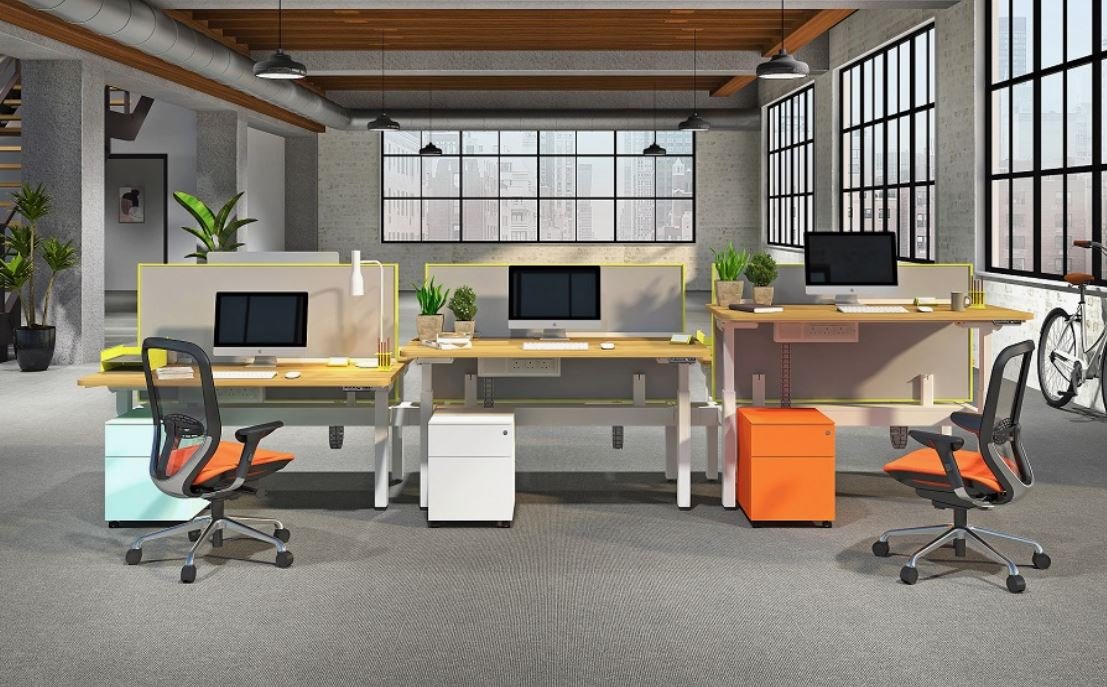
Choosing the right Office Seating Philippines solutions is an important part of creating a productive, comfortable, and professional workplace. Office seating is not limited to a standard desk chair. A complete seating plan can include ergonomic task chairs, executive chairs, visitor chairs, conference seating, reception chairs, lounge furniture, modular seating, and waiting-area solutions. The right combination depends on how employees work, how customers move through the space, and what type of environment a business wants to create.
For companies in Manila and Quezon City, seating decisions can also be influenced by office size, workplace layout, daily usage, climate, maintenance requirements, and available budget. A chair that looks attractive in a showroom may not necessarily be the right choice for an employee who spends most of the working day at a computer. Similarly, reception seating needs different characteristics from an executive chair or a conference-room chair. Understanding these differences makes it easier to choose office furniture that delivers long-term value.
What Is Office Seating?
Office seating refers to the range of chairs and seating furniture designed for professional workplaces. It includes seating for employees, managers, executives, visitors, customers, meeting participants, and people using shared spaces.
Common categories include ergonomic task chairs, executive office chairs, visitor chairs, conference chairs, reception chairs, lounge chairs, modular seating, and beam or gang seating. Different seating types serve different purposes, so businesses should select furniture according to the function of each area rather than choosing every chair based only on appearance.
A well-planned seating solution should balance comfort, support, durability, appearance, space efficiency, and budget. For larger projects, businesses should also consider delivery, installation, warranty, replacement parts, and after-sales support.
Why Office Seating Matters in Modern Workplaces
Employees can spend many hours working at desks, attending meetings, collaborating with colleagues, or using shared office spaces. Because seating is used so frequently, its design can influence the overall experience of the workplace.
An appropriate office chair should allow the user to maintain a comfortable working position while providing suitable support. Adjustable features can be particularly useful because employees have different body sizes, working habits, and preferences.
The goal should not simply be to purchase the most expensive chair. Instead, businesses should look for seating that matches the tasks being performed. A call-center employee, company executive, receptionist, meeting participant, and occasional visitor may all require different seating characteristics.
This task-based approach can help businesses avoid spending too much on unnecessary features while ensuring that employees receive the support they actually need.
Types of Office Seating Philippines Businesses Can Consider
The best office seating plan usually combines several categories instead of using one chair throughout the entire workplace.
Ergonomic Task Chairs
Task chairs are commonly used at individual workstations. They are designed for employees who spend significant amounts of time working at desks and computers.
Useful features may include seat-height adjustment, backrest adjustment, lumbar support, armrests, reclining mechanisms, and breathable materials. The exact features needed depend on the user’s tasks and the chair’s design.
For open-plan offices in Manila and Quezon City, ergonomic task chairs can be particularly useful because the same workstation may be occupied for extended periods throughout the working day.
Executive Office Chairs
Executive chairs are generally designed for managers, directors, and private offices. They often feature a larger backrest, padded seating, premium upholstery, and a more substantial appearance.
However, appearance should not replace functionality. An executive chair should still provide appropriate support and adjustment for the person using it.
Visitor Chairs
Visitor seating is important in reception areas, offices, consultation rooms, and meeting spaces. These chairs are typically used for shorter periods than employee task chairs.
Durability and easy maintenance can be important considerations because visitor seating may be used by many different people throughout the day.
Conference Room Chairs
Conference chairs should support comfortable meetings without making the room feel overcrowded. Businesses should consider chair dimensions, table height, movement, storage, and the expected duration of meetings.
For smaller conference rooms, compact seating can help preserve usable floor space.
Reception and Waiting-Area Seating
Reception areas create an early impression of a company. Seating should therefore support comfort while fitting the company’s professional image.
Depending on the space, reception seating may include individual chairs, sofas, benches, or modular lounge furniture. The layout should also provide enough room for people to enter, sit, move around, and leave comfortably.
Modular and Lounge Seating
Modern workplaces increasingly include informal collaboration zones where employees can hold discussions away from their desks. Modular seating can be useful because different configurations can support meetings, waiting areas, breakout spaces, or informal conversations.
Flexible seating can also help businesses make better use of multi-purpose office areas.
How to Choose the Right Office Seating
Selecting Office Seating Philippines should begin with the users and their daily activities rather than with color or style.
First, identify where the seating will be used. Employee workstations, reception areas, conference rooms, executive offices, cafeterias, and waiting areas all have different requirements.
Next, consider how long people will normally sit. A chair for occasional visitors does not necessarily require the same specifications as a task chair used for prolonged computer work.
Businesses should then evaluate adjustability, seat dimensions, back support, armrests, materials, base construction, casters, and available warranty coverage.
It is also useful to test seating before purchasing large quantities. If possible, employees or project representatives should sit in sample chairs and assess comfort, adjustment range, movement, and overall fit.
Ergonomic Features to Look For
Ergonomics should be an important part of any office seating decision. A good ergonomic setup allows users to adjust their chair and workstation to create a comfortable working position.
Useful chair features can include adjustable seat height, appropriate seat depth, lumbar support, adjustable backrest positioning, armrest adjustment, and a mechanism that permits comfortable movement.
However, more adjustments do not automatically mean a better chair. A chair should provide adjustments that are practical for the intended users.
The chair should also work together with the desk, monitor, keyboard, and other workstation components. Office seating should therefore be evaluated as part of the complete workstation rather than as an isolated product.
Mesh, Fabric, Leatherette, or Other Materials?
Material selection affects comfort, appearance, maintenance, and durability.
Mesh seating is often considered for workplaces where airflow and breathability are priorities. This can be useful in warm environments, although the quality and construction of the mesh should still be evaluated.
Fabric seating provides many design possibilities and can create a softer visual appearance. It may be suitable for meeting rooms, lounges, reception spaces, and selected task chairs.
Leather and leatherette can create a more formal appearance and are often associated with executive environments. They can also be easier to wipe clean, depending on the material and finish.
The right choice depends on the application, cleaning requirements, design concept, expected usage, and budget.
Office Seating for Manila and Quezon City Workplaces
Businesses searching for office seating in Manila and Quezon City should consider more than product appearance. Office environments in these locations can range from compact startup offices and coworking spaces to large corporate facilities, schools, healthcare environments, government offices, and commercial fit-outs.
Space planning is particularly important when multiple employees share a floor. A chair that is too large can reduce circulation space, while seating that is too small or poorly matched to the workstation can compromise comfort.
For larger projects, procurement teams should prepare information such as the number of users, seating categories, preferred materials, workstation dimensions, delivery location, installation requirements, project schedule, and budget range.
This information makes it easier for a furniture supplier to recommend appropriate options rather than providing a generic product list.
Office Seating for Corporate and Commercial Projects
Corporate offices often require several seating categories within one project. Employees may need task chairs, executives may require premium seating, meeting rooms may need conference chairs, and reception areas may require visitor or lounge furniture.
For this reason, businesses should evaluate the complete workplace rather than purchasing individual chairs independently.
A coordinated office seating plan can create a consistent visual identity while allowing different departments to use furniture suited to their activities.
For companies expanding their workforce, modular or standardized seating can also simplify future additions. Procurement teams can establish specifications for different employee levels and workplace zones, making future purchases more consistent.
Office Seating for Schools, Hospitals, and Government Offices
Institutional environments have their own requirements. Schools may need durable seating that can withstand frequent use, while hospitals and healthcare-related facilities may prioritize cleanability, durability, and appropriate movement through shared areas.
Government offices can require furniture that meets project specifications, documentation requirements, delivery schedules, and procurement procedures.
For these projects, buyers should confirm technical specifications, dimensions, load requirements, warranty terms, material details, and installation arrangements before placing an order.
How Much Should You Budget for Office Seating?
There is no single correct price for office seating because costs vary according to design, materials, mechanisms, specifications, quantity, customization, and brand.
Instead of comparing chairs only by their purchase price, businesses should consider total value. A low-cost chair that requires frequent replacement may not provide the same long-term value as a more durable chair with suitable warranty coverage.
For bulk office furniture projects, requesting a quotation based on the actual number of seats can also provide a more accurate understanding of the total investment.
A professional quotation should ideally clarify product specifications, quantities, pricing, delivery, installation, warranty, and other applicable project costs.
Common Office Seating Buying Mistakes
One common mistake is choosing chairs based entirely on appearance. A stylish chair may not be suitable for long working hours.
Another mistake is buying the same seating for every area. Employee workstations, conference rooms, reception areas, and executive offices have different requirements.
Ignoring measurements is another frequent problem. Before ordering, businesses should confirm chair dimensions and make sure the furniture works with existing desks and room layouts.
Buyers should also avoid focusing exclusively on the cheapest quotation. Product durability, warranty, service, replacement availability, and supplier reliability can influence the overall cost of ownership.
Finally, businesses should not overlook delivery and installation. For large Manila or Quezon City office projects, furniture logistics can affect project schedules and workplace downtime.
Office Seating Philippines Buying Checklist
Before placing an order, businesses should review the following considerations:
- Intended seating area
- Number of users
- Expected daily usage
- Chair dimensions
- Adjustability
- Ergonomic features
- Upholstery or material
- Weight capacity
- Durability requirements
- Office design
- Available floor space
- Warranty
- Delivery requirements
- Installation requirements
- Replacement or after-sales support
- Total project budget
This approach helps procurement teams compare products using practical criteria instead of relying only on photographs or promotional descriptions.
Why Choose Queens Arts and Trends for Office Seating?
Businesses looking for Office Seating Philippines solutions need a supplier that understands the difference between individual chair purchases and complete workplace requirements. Queens Arts and Trends can be positioned around a project-focused approach, helping businesses consider seating requirements alongside office layout, functionality, design, and budget.
Whether you are furnishing a corporate office, upgrading a reception area, creating a meeting room, or planning seating for a larger workplace, the right product selection should begin with your actual requirements.
For businesses in Manila and Quezon City, requesting a quotation based on the number of users, seating type, preferred specifications, and project requirements can make the buying process more efficient. It also gives the supplier enough information to recommend options that are appropriate for the workplace rather than simply presenting a generic selection.
Frequently Asked Questions About Office Seating Philippines
What is the best office seating for long working hours?
Ergonomic task chairs with appropriate adjustability and support are generally a strong choice for employees who spend extended periods working at desks.
What types of office seating are available in the Philippines?
Common options include ergonomic task chairs, executive chairs, visitor chairs, conference chairs, reception seating, lounge chairs, modular seating, and beam seating.
How do I choose office seating for a Manila office?
Start by identifying the number of users, daily sitting duration, workstation dimensions, office layout, budget, and required features. Testing sample chairs can also help before making a bulk purchase.
Is mesh seating suitable for Philippine offices?
Mesh can be a practical option where breathability is important, but buyers should evaluate the quality, construction, support, and overall suitability of the chair rather than choosing mesh based on material alone.
Should every employee use the same office chair?
Not necessarily. Different employees may have different roles, body dimensions, tasks, and preferences. A workplace can use different seating categories while maintaining a consistent overall design.
What should I ask an office furniture supplier before ordering?
Ask about product specifications, dimensions, materials, warranty, availability, delivery, installation, customization, after-sales service, and quotation terms.
Can office seating be purchased in bulk?
Yes. Businesses can request project-based quotations when furnishing multiple workstations, departments, meeting rooms, reception areas, or entire offices.
Build a Better Workplace With the Right Seating
Office seating is one of the most frequently used elements in a workplace, so it deserves careful consideration. The best solution is not necessarily the most expensive chair or the chair with the longest list of features. It is the seating that matches the user’s tasks, supports comfortable working, fits the available space, complements the office environment, and provides appropriate long-term value.
For businesses in Manila and Quezon City, a thoughtful Office Seating Philippines strategy can cover everything from ergonomic employee chairs to executive, visitor, conference, reception, and lounge seating. By assessing requirements before purchasing and working with a supplier that understands commercial furniture projects, businesses can create a workspace that is comfortable, professional, practical, and ready for future growth.
If you are planning a new office, refurbishment, expansion, or bulk furniture purchase, Queens Arts and Trends can be included in your supplier comparison process. Request a quotation based on your seating requirements, workplace size, preferred specifications, and project timeline to start planning the right seating solution.

