
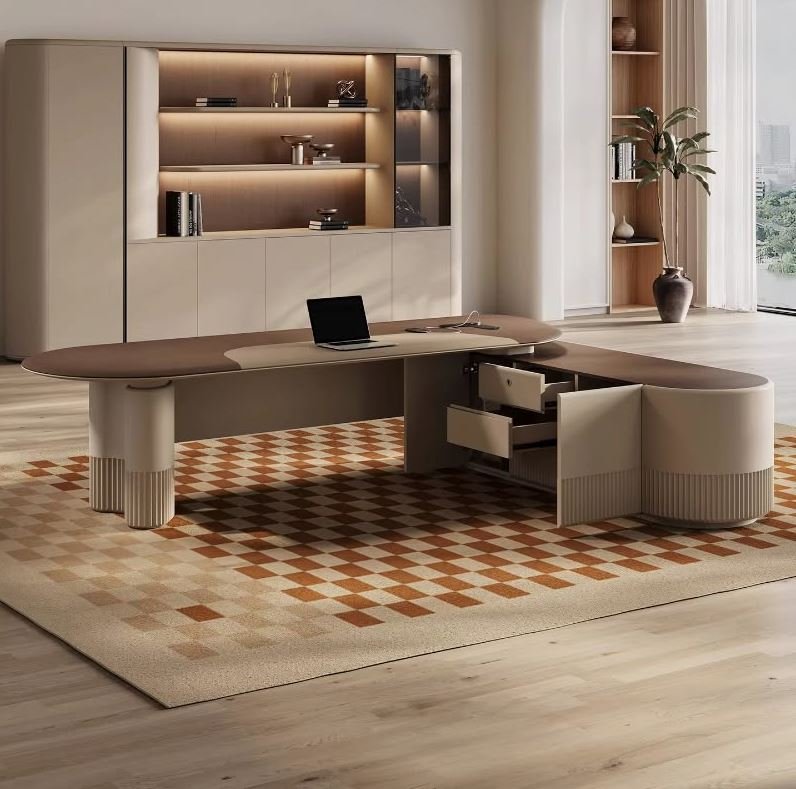
Choosing the right Professional Office Furniture can influence how employees work, how clients perceive a company, and how efficiently a workplace uses its available space. A well-planned office should provide more than attractive desks and chairs. It should support comfort, productivity, collaboration, organization, and the overall identity of the business. For companies in Manila and Quezon City, selecting furniture that suits the local business environment, office size, workforce, and daily requirements can make a significant difference.
What Is Professional Office Furniture?
Professional office furniture refers to workplace furniture designed to support business operations while maintaining a functional, organized, and presentable environment. It can include office desks, executive tables, workstations, office chairs, meeting tables, reception counters, filing cabinets, storage units, pedestals, conference furniture, and collaborative seating.
The right furniture should balance appearance with practical performance. A stylish desk may look impressive, but it also needs enough workspace, suitable dimensions, durable construction, and convenient storage. Likewise, an office chair should provide appropriate support for employees who spend several hours working at their desks.
For businesses, furniture is therefore an important part of workplace planning rather than simply an interior decoration expense.
Why Office Furniture Matters for Philippine Businesses
Office environments in Manila and Quezon City can vary considerably. A small startup may operate from a compact commercial space, while a large corporation may require dedicated departments, meeting rooms, executive offices, reception areas, and employee workstations. Schools, hospitals, government offices, and professional service firms also have different furniture requirements.
Good Professional Office Furniture helps businesses use their available floor area effectively. Properly sized workstations can reduce unnecessary congestion, while suitable storage can keep documents and supplies organized. Comfortable seating can also contribute to a more pleasant working environment.
The visual appearance of an office matters as well. When clients, suppliers, applicants, or business partners enter a reception or meeting area, the furniture contributes to their first impression of the company. A clean, coordinated workspace can communicate professionalism without relying on excessive decoration.
Choosing the Right Office Desk
An office desk should match the employee’s responsibilities and the way the space is used. Individual workstations are often suitable for employees who need dedicated work areas, while larger desks may be more appropriate for managers and executives.
When selecting desks, consider available floor space, computer equipment, paperwork, storage requirements, cable management, and the possibility of future expansion. A desk that looks good in a showroom may not be practical if it leaves insufficient circulation space in the actual office.
For executive rooms, a larger executive desk can establish a formal appearance. In open-plan environments, modular workstations can make it easier to accommodate teams while maintaining organized work zones.
Office Chairs and Employee Comfort
Office chairs are among the most frequently used pieces of workplace furniture, so they deserve careful consideration. Employees may spend a large portion of their working day seated, making adjustability, support, seat dimensions, and overall comfort important purchasing factors.
Businesses should consider chairs with adjustable features where appropriate. The correct chair should work with the height of the desk and allow employees to maintain a comfortable working posture.
Rather than choosing chairs based only on appearance or price, procurement teams should evaluate durability, warranty coverage, adjustability, materials, and expected daily use. Testing chairs before making a large purchase can also help businesses make a more informed decision.
Workstations for Efficient Office Layouts
Workstations are particularly useful for businesses that need to accommodate several employees within a limited floor area. They can create defined working zones while maintaining an open and collaborative atmosphere.
A workstation layout should take into account team structure and communication requirements. Departments that frequently collaborate may benefit from being positioned together. Employees who handle confidential information may require greater privacy.
In Manila and Quezon City, where commercial office space can be expensive, efficient space planning can be especially valuable. Furniture should make productive use of available floor area without creating a cramped workplace.
Meeting Tables for Collaboration
Meeting rooms require furniture that supports communication and teamwork. A meeting table should provide enough surface area for documents, laptops, presentation equipment, and other necessary items.
The size and shape should correspond with the number of people who regularly use the room. A table that is too large can waste valuable space, while one that is too small can make meetings uncomfortable.
Businesses can select from different configurations depending on their needs, including rectangular, boat-shaped, round, and modular meeting tables. The most appropriate option depends on room dimensions, seating capacity, meeting style, and overall office design.
Storage and Filing Solutions
A professional workplace needs practical storage. Filing cabinets, mobile pedestals, shelves, cupboards, and other storage furniture can help employees organize documents, supplies, and equipment.
Storage should be planned alongside desks and workstations rather than added as an afterthought. Frequently accessed materials should remain convenient to reach, while sensitive or confidential documents should have appropriate security.
Mobile pedestals can be useful in individual work areas because they provide storage without requiring a large permanent cabinet. Larger filing and storage systems may be more suitable for departments that manage substantial volumes of paperwork.
Reception Furniture Creates the First Impression
The reception area is often the first physical point of contact between a company and its visitors. Reception desks, waiting chairs, side tables, and storage should therefore create an organized and welcoming environment.
The reception counter should suit the available space and the activities performed there. Reception staff may require computers, telephones, documents, storage, and visitor-management materials, so functionality should remain a priority.
For businesses in Manila and Quezon City, reception furniture can also be selected to reflect a company’s professional identity while complementing its interior design.
How to Choose Professional Office Furniture
Start by identifying how the office will actually be used. Determine the number of employees, departments, meeting requirements, storage needs, available floor area, and future growth plans.
Next, establish a realistic furniture budget. Instead of focusing only on the initial purchase price, consider durability, maintenance, warranty, replacement requirements, and expected lifespan.
Measurements should also be taken before ordering. This includes doorways, elevators, corridors, room dimensions, workstation areas, and circulation paths. Accurate measurements can prevent problems during delivery and installation.
Finally, compare materials, construction quality, ergonomics, functionality, warranties, and supplier support. A reliable supplier should be able to help businesses select furniture based on their specific workplace requirements.
Professional Office Furniture for Small Offices
Small offices require careful space management. Oversized desks and bulky storage can quickly reduce usable floor area. Compact desks, modular workstations, mobile storage, and appropriately sized chairs can help maintain an efficient layout.
A small office does not need to look crowded to provide sufficient functionality. Choosing furniture with multiple purposes can help maximize the available space. For example, storage-integrated workstations can reduce the need for separate cabinets.
Businesses should also leave sufficient pathways between furniture pieces. Good circulation improves accessibility and makes the workplace feel more comfortable.
Professional Office Furniture for Growing Companies
Growing businesses should consider flexibility when purchasing furniture. Employee numbers may change, departments may expand, and office layouts may need to be modified.
Modular furniture can make future changes easier because workstations and other components can sometimes be rearranged as requirements evolve. Standardized furniture dimensions can also help maintain consistency when additional units are purchased later.
For startups and expanding companies, selecting durable furniture from the beginning can reduce the need for frequent replacements and support a more consistent workplace appearance.
Furniture Considerations for Different Industries
Corporate offices may prioritize executive furniture, workstations, conference tables, reception furniture, and employee seating. Startups may focus on flexibility, collaboration, and efficient use of space.
Schools can require desks, chairs, administrative workstations, storage, and staff-room furniture. Hospitals and healthcare-related workplaces may have specialized administrative areas requiring durable and easy-to-maintain furniture.
Government offices often need practical workstations, filing systems, reception furniture, and meeting-room solutions. Architects and interior designers may also require furniture suppliers that can support customized layouts and project-specific specifications.
Understanding the user’s industry before purchasing furniture can therefore lead to better results than selecting products based solely on appearance.
How to Plan an Office Furniture Budget
A furniture budget should account for more than desks and chairs. Businesses may need to include meeting tables, reception furniture, storage, pedestals, installation, delivery, and future expansion.
Prioritize items according to employee usage and business requirements. High-use furniture should generally receive greater attention to durability and ergonomic design.
It is also useful to request quotations based on the complete project rather than comparing isolated product prices. A complete quotation can make it easier to understand the total investment required for a workplace.
Common Office Furniture Buying Mistakes
One common mistake is purchasing furniture before measuring the office. Even high-quality furniture can become problematic if it does not fit the intended space.
Another mistake is prioritizing appearance over functionality. Office furniture needs to support daily activities, not simply look attractive in photographs.
Businesses may also overlook future growth. A layout that works for the current workforce may become inefficient as the company expands.
Ignoring delivery and installation requirements can create additional problems. Before placing a large order, businesses should clarify delivery schedules, installation arrangements, warranties, maintenance support, and after-sales service.
Why Local Office Furniture Knowledge Matters
Working with a supplier familiar with the Manila and Quezon City market can make office furniture planning easier. Local knowledge can be useful when considering office sizes, commercial environments, delivery requirements, and project coordination.
Businesses should look for a supplier that can understand their workplace requirements instead of simply selling individual furniture pieces. For larger projects, consultation can help coordinate desks, chairs, workstations, storage, meeting areas, and reception furniture into one practical solution.
Questions to Ask Before Buying Office Furniture
Before making a purchase, businesses should ask whether the furniture fits the available space, whether it supports the intended work activities, and whether the materials are suitable for expected daily use.
It is also important to ask about warranty coverage, delivery, installation, customization options, replacement parts, and after-sales support. For larger offices, requesting product specifications and layout recommendations can help procurement teams compare suppliers more effectively.
FAQs
What should I consider when buying office furniture?
Consider office dimensions, employee needs, furniture durability, comfort, storage, layout, budget, warranty, and future expansion.
What furniture is essential for a professional office?
Essential items commonly include desks or workstations, office chairs, storage units, filing cabinets, and suitable furniture for meeting and reception areas.
Is ergonomic office furniture worth considering?
Yes. Furniture designed with adjustability and workplace comfort in mind can be a valuable consideration for employees who spend long periods working at desks.
How can I maximize a small office?
Use appropriately sized desks, modular workstations, vertical storage, mobile pedestals, and a layout that preserves clear circulation paths.
Where can businesses buy office furniture in Manila or Quezon City?
Businesses should compare local suppliers based on product quality, range, customization, warranty, delivery, installation, and after-sales support rather than choosing solely by price.
How often should office furniture be replaced?
There is no universal replacement schedule. Replacement depends on furniture quality, usage, maintenance, condition, and whether the existing furniture continues to meet workplace requirements.
Build a Better Workplace With the Right Furniture
The right office furniture should support the way people actually work. From employee workstations and ergonomic chairs to executive desks, meeting tables, reception counters, and storage systems, every piece should contribute to an organized and functional workplace.
For businesses searching for Professional Office Furniture in Manila and Quezon City, the best approach is to evaluate the complete workplace rather than purchasing individual products without a plan. Consider your space, employees, workflow, brand image, budget, and future needs before making a decision.
If you are planning a new office, renovating an existing workplace, or expanding your current setup, a professional furniture consultation can help you identify suitable options and create a more efficient layout. Queens Arts and Trends can be considered as part of your supplier research when comparing office furniture solutions for Philippine workplaces.

